
Changes in the chemical nature of the soils undergoing the reconstitution treatment can be targeted depending on the land improvement objectives because, by applying our pedotechnics, soils with specific characteristics can be generated.
However, there are general characteristics that are improved in soil reconstitution treatments.
Organic Carbon ? Organic Substance
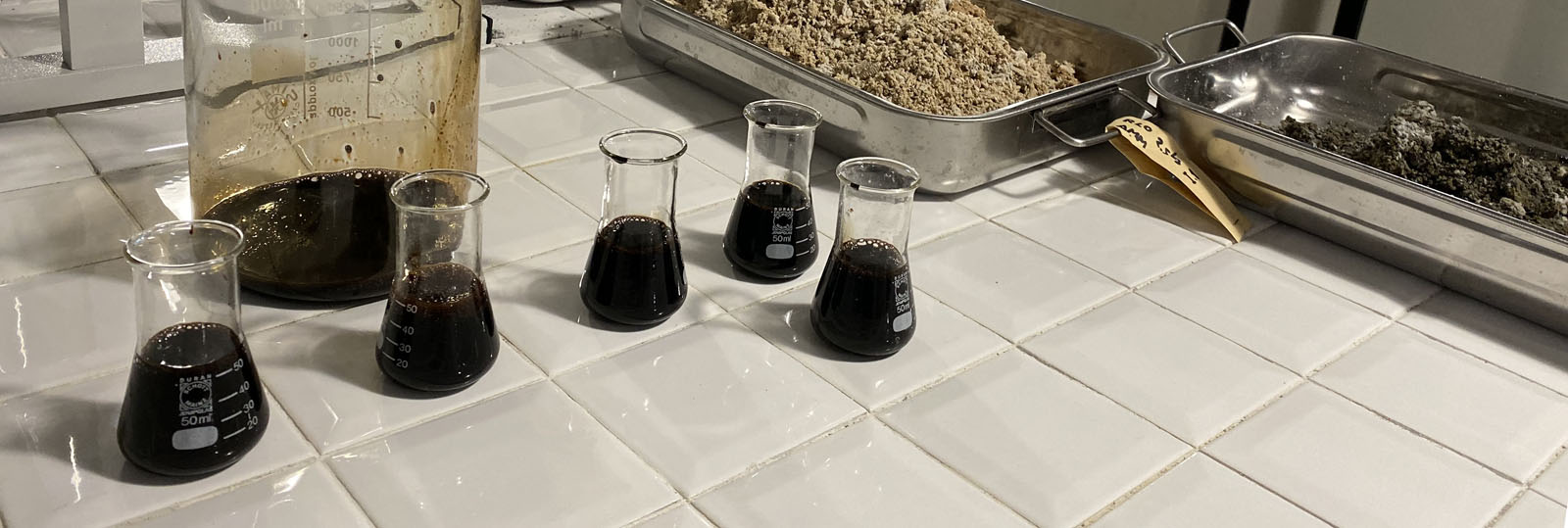
The reconstituted soils possess, thanks to the specific chemical-mechanical treatment, a high supply of organic substance with a character of stability and resistance to mineralization due both to the structural conformation with the mineral fraction and to the stoichiometric ratio with nitrogen and phosphorus.
Organic carbon in reconstituted soils is optimal at concentrations of 30 g/kg (3%) at 60 g/kg (6%); can, thanks to the treatment, get to the typical equipment of the Histosuoli (10 ? 12%) to achieve specific restoration conditions, particularly in the forestry sector.
Humic and Fulvic Acids
One of the peculiar aspects of soil reconstitution is the high efficiency of organic matter humification. The process creates aggregates of soil in which the component evolves towards its stabilization obtaining, over time, a high concentration of humic and fulvic acids: the endowment of this important fraction is, for humic acids, four times higher than common agricultural soils and twice as high as for fulvic acids.
The precious organic component is manifested by improving the soils from a physical, chemical, microbiological and nutritional point of view for the crops.
The ratio between humic and fulvic acids in reconstituted soils is always greater than 1, framing the soils produced as having excellent fertility.
Carbon Nitrogen Ratio
The reconstituted lands have as their peculiar character a high C/N ratio (20) which gradually tends to reduce, stabilizing, depending on the management of the land, to values between 10 and 12: optimal numbers for the preservation of organic matter.
Cation exchange capacity
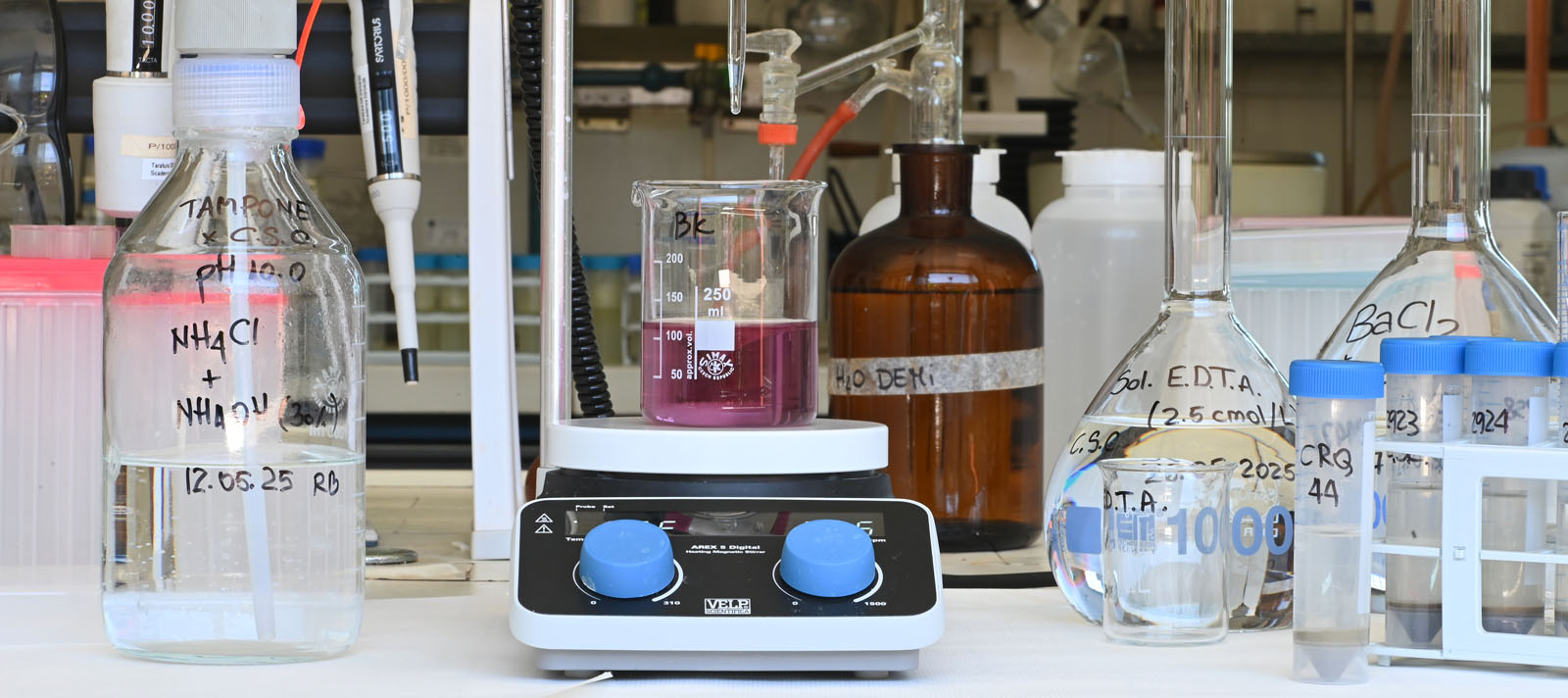
The increase of organic matter in soils and, above all, the high formation of humic and fulvic acids, leads to an increase in cation exchange capacity, a parameter that influences, above all, the property of retaining exchangeable elements and making them available to the circulating solution.
The reconstitution treatment increases the sites of the exchange bases leading to an increase in the reserve of exchangeable cations such as: Potassium, Calcium, Magnesium and the ammonium cation.
As a result of the increase in exchange capacity there is an increase in the buffer capacity of the soil.
Nitrogen ? Phosphorus - Potassium
The allocation of micro-nutrients is mainly determined by fertilisation activities and therefore by the agronomic management of the land; in the reconstituted soils, conditions are created thanks to which the macro and microelements are more retained in the soil thanks to the lower leaching, the greater absorption capacity of the nutrients and the absorption of the circulating solution of the soil.
In the soils produced by the reconstitution treatment there are the best conditions for the optimization of fertilization by minimizing the loss of nutrients.
In the same section:
 EN
EN  IT
IT  RU
RU 