
According to the new EU Directive 2025/2360 mcm analysis laboratories Ecosistemi, together with the fields of pedotechnology and research, have started the sampling of numerous types of agrarian soils, reconstituted soils and technosols for a series of analytical investigations aimed at harmonizing analytical methods on the determination of the different forms of organic matter in the soil. 
The laboratories of mcm Ecosistemi are engaging in intensive analytical work on the different types of analyses to describe the state of organic carbon in soils.

In the soil there are three fractions of SOC (Soil Organic Carbon) that are biologically, physically and chemically significant: Particulate matter (POC ? Partculate organic carbon) or (POM? Partculate organic matter) , humus or mineral-associated organic carbon or MAOM and resistant (ROC). POC ? POM and MAOC – MAOM differ in formation mechanisms, functions and replacement times in soils and can be considered as organic carbon fractions in “unprotected” and “protected” soils respectively. POC (POC) is mainly derived from partially decomposed plant fragments: it is between 0.05 and 2 mm in size and, where it is not occluded in aggregates, has a relatively short residence time (from years to decades) and can be easily decomposed under appropriate environmental conditions. MAOC (MAOM) is derived primarily from microbial by-products, is closely related to minerals or occluded in small microaggregates (< 53 µm) and has a longer average residence time than POC (POM) in soil (from decades to centuries); It is less bioavailable than POC. MAOC contributes to the storage and release of nutrients (cation exchange capacity) and structural stability of the soil.
POC (POM) is considered a key indicator of soil fertility, has a faster cycle than MAOC (MAOM) and is therefore more vulnerable to disorders. In contrast, MAOC can be used to assess the ability to promote soil organic carbon sequestration and mitigate atmospheric CO2.
Dissolved organic matter (DOM) is defined as the fraction of organic matter in solution that passes through a 0.45 ?m filter. DOM, being the most mobile and actively cyclic organic matter fraction, influences a spectrum of biogeochemical processes in aquatic and terrestrial environments. DOC is the most important substrate for microorganisms and represents a labile form of carbon that is rapidly renewed in soils.
Soil characterization activities from an environmental and agronomic point of view carried out by mcm laboratories Ecosistemi, together with the soil regeneration works carried out by the company, require excellence in the determination of the parameters of these components of the organic substance present in the soil. They are a fundamental tool both for the diagnosis of the state of health of the soil and its evolution, both for the pedoengineering and pedotechnic activities carried out by our Company for the regeneration of soil technology and to offer its customers a more accurate assessment tool for the diagnosis of the state of health of agricultural and forestry land.
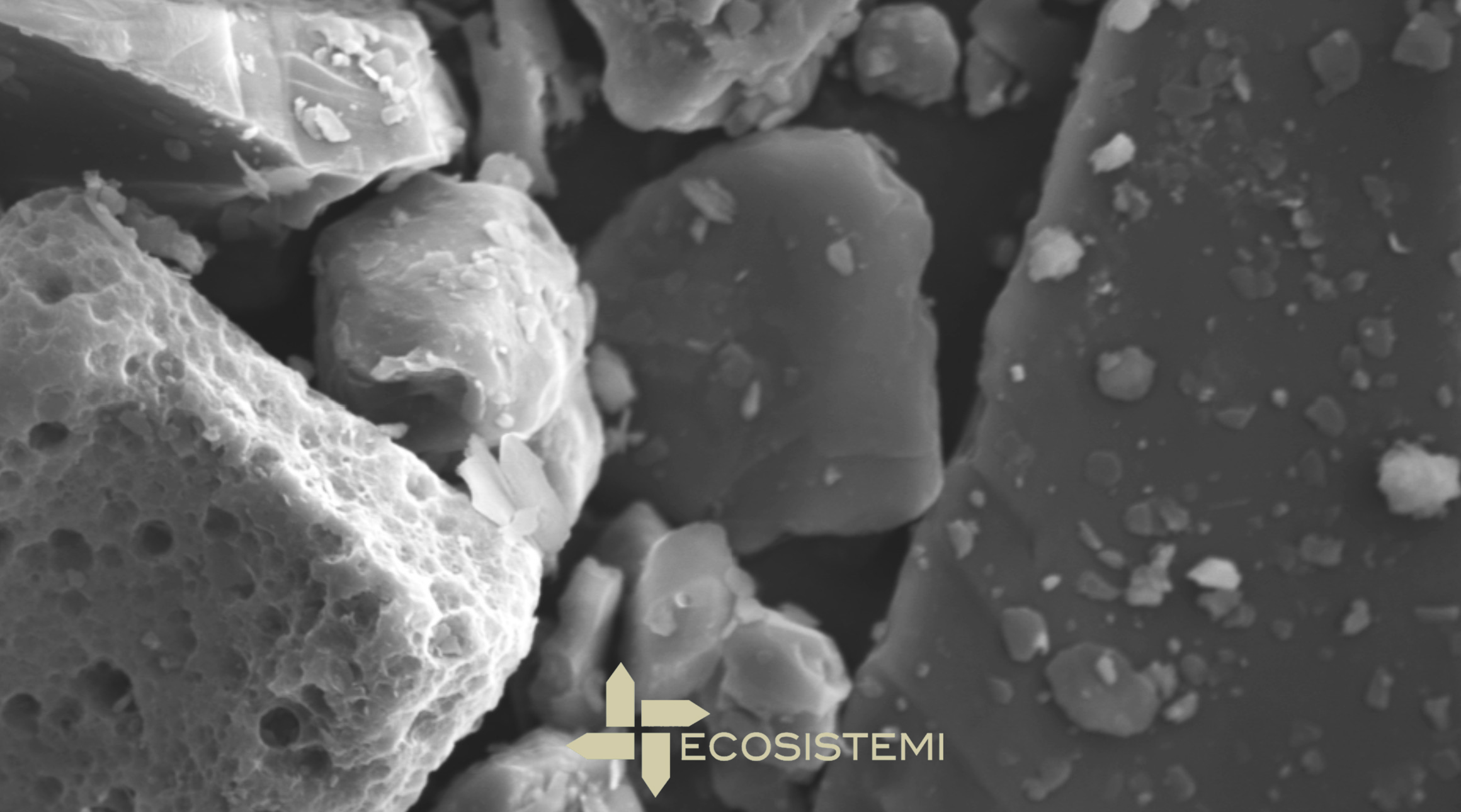
This project will be associated with the investigation with our scanning electron microscopy laboratory for structural investigations of organic matter and its relationship with soil mineral components.
 EN
EN  IT
IT  RU
RU 