
New important publication on reconstituted soils - produced by the University of Padua Department of Agronomy, Animals, Food, Natural Resources and Environment (DAFNAE), and the Université Libre De Bruxelles (CPBL) andEcosistemi for the part of chemical sampling and analysis - on the microbial biodiversity of three soil types: degraded, reconstituted and farmed in an area of intervention by means of reconstitution technology by Ecosistemi
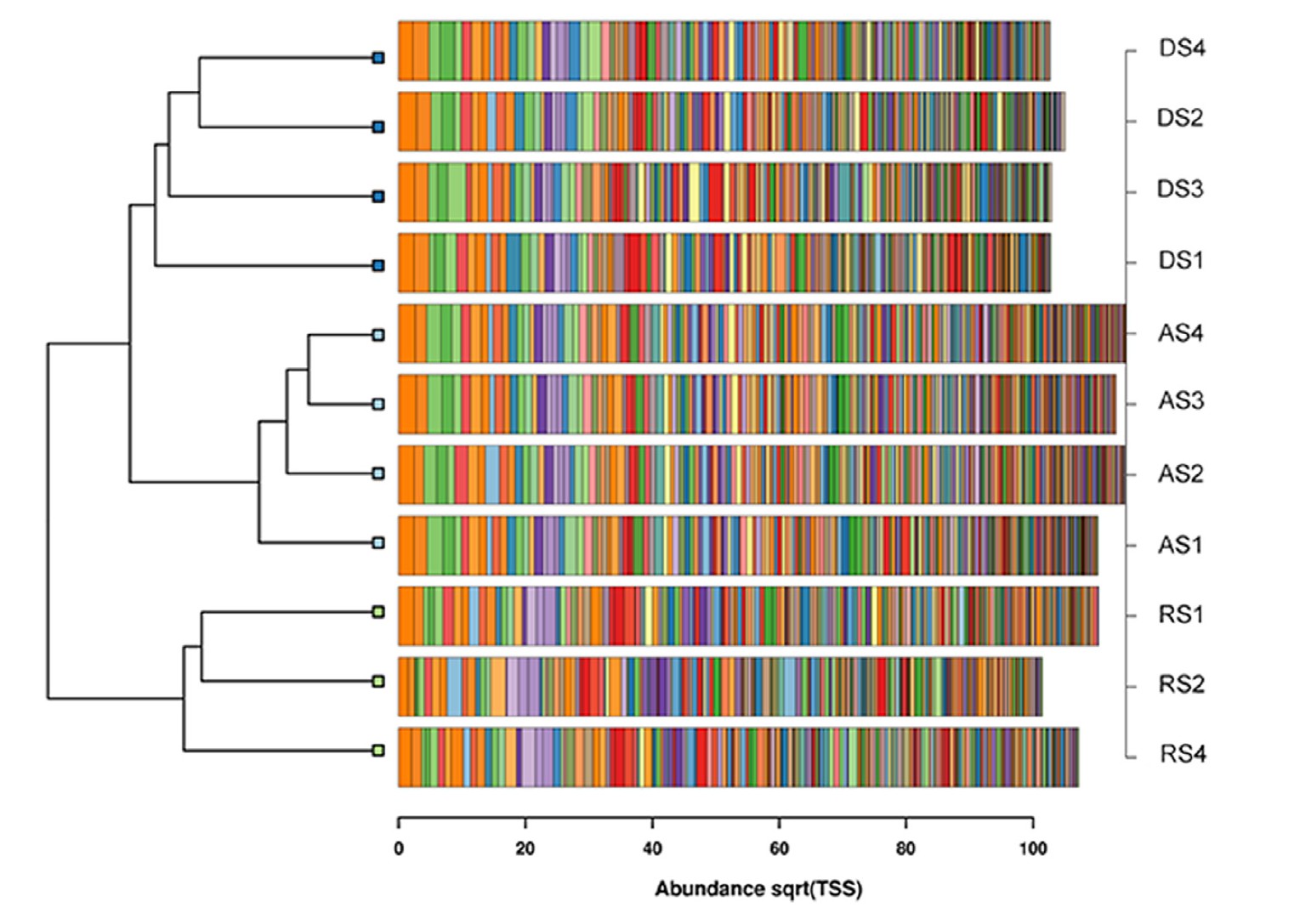
The research, entitled: ‘Microbial diversity of Reconstituted, Degraded, and Agricultural soil Assessed by 16sDNA Multi-Amplicon Sequencing’ was carried out by means of total soil DNA extraction, multi-amplicon Sequencing, which carried out sequencing using an Ion GeneStudio S5 system to compare soils from the point of view of bacterial communities. The sequenced readings were processed to assign the taxonomy and then the identification of the different microbial communities between the sampling sites. The study shows that reconstitution works by enhancing the active microbial community by improving its conditions compared to degraded soil and natural agricultural soil.

 EN
EN  IT
IT  RU
RU 