
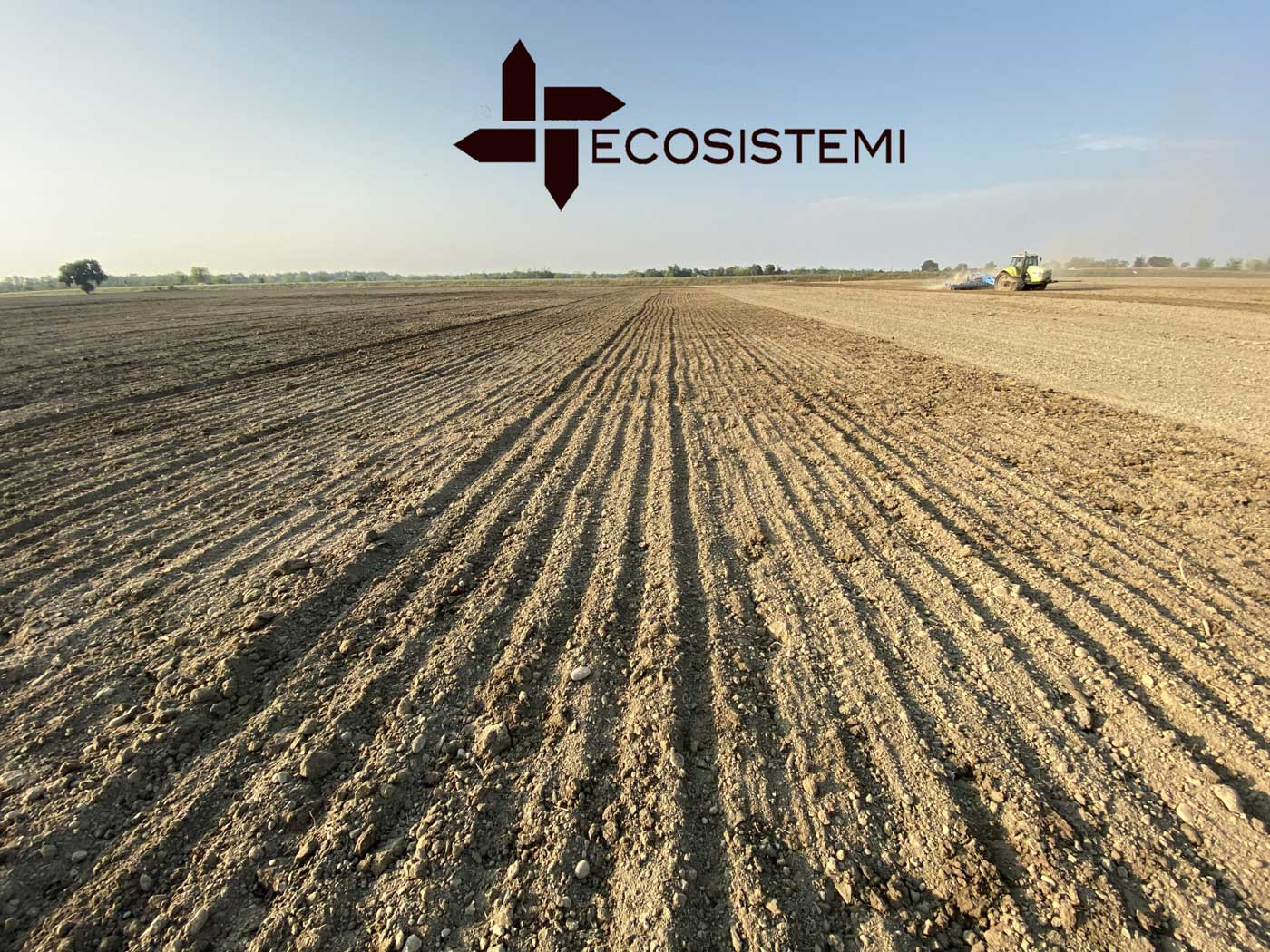
After the test on durum wheat cultivation, carried out on reconstituted soils only three months after their relocation, the analytical control of the soils was carried out in order to study the evolution of sandy soils on parameters of particular agronomic interest: Water Retention Capacity, Organic Carbon, Humic and Fulvic Acids, Cation Exchange Capacity, Nutrient Ratio (Nitrogen, Phosphorus, Potassium)
The care in the analyses carried out, applying the Official Methods of Chemical Analysis and Soil Physics on the parameters, in addition to the rigorous soil sampling process, it was able to make important comparisons between the reconstituted soils and the original soils with an improvement in chemical fertility that confirms the excellent production results of the soil subjected to improvement with our technology.
The laboratory found with the analyses a strong increase in organic carbon, determined by the Walkley-Black method bringing the soils to 8?% organic matter; an increase, in addition to the expected estimates, of humic and fulvic acids giving organic carbon a stability unthinkable for the type of soils of the sto (sandy soils): the parameter has been determined by the method of extraction, fractionation and determination of organic carbon; a strong increase in the cation exchange capacity (Method with barium chloride and triethanolamine) which involves a greater retention, by adsorption, of the nutrients (potassium, calcium, magnesium, ammonium, iron, etc.) which, prior to treatment with reconstitution, was very low.
The physical properties of the soils subjected to reconstitution have improved considering also the results of our laboratory that has determined, with the official methods, the water retention, the stability of the aggregates, the specific weight and the color.
The studies undertaken will be deepened to present the results to the international scientific community.
 EN
EN  IT
IT  RU
RU 